
Stone Cutting Tools Explained: Types, Pros & Cons, and the Fastest Way to Split Stone
If you’re searching for the best stone cutting tool, you’ve probably realized there’s no one-size-fits-all answer. Whether you’re a one-man operation, a crew with multiple employees, or a stone yard or manufacturer, different tools impact speed, labor cost, safety, and profitability in very different ways.
In this guide, we’ll break down the most common stone cutting tools, explain their real-world pros and cons, and show how choosing the right tool can dramatically reduce labor time—no matter the size of your operation.
What Is a Stone Cutting Tool?
A stone cutting tool is any manual or powered tool designed to cut, split, or shape natural or manufactured stone. These tools are used in:
Stone masonry
Landscaping projects
Stoneyard production
Choosing the right stone cutting tool can impact speed, safety, cost, and finish quality.
Common Types of Stone Cutting Tools
Below are the most widely used stone cutting tools for veneer stone, pavers, brick, and stone materials up to approximately 3 inches thick, listed from traditional methods to modern labor-saving solutions.
1. Chisel and Hammer (Hand Tools)
Overview: The most traditional way to cut stone. A mason uses a chisel and hammer to score and break stone manually.
Pros:
Low upfront cost
No electricity or fuel required
Good for small adjustments
Cons:
Heavy dust production (including silica)
Slower than purpose-built stone cutting tools
Fatiguing for long production days
Less consistent results for repeated cuts
Best for: Everyday jobsite cutting, small adjustments, and crews without access to specialized stone cutting tools.
2. Circular Saw (Masonry Saw)
Overview: A larger saw fitted with a diamond blade, often used with water to reduce dust.
Pros:
Cleaner cuts than grinders
Can handle thicker stone
Faster than handheld tools
Cons:
Silica dust exposure
Requires water or dust control
Slower setup time
Not ideal for splitting stone naturally
Best for: Straight, precise cuts in slabs or pavers.
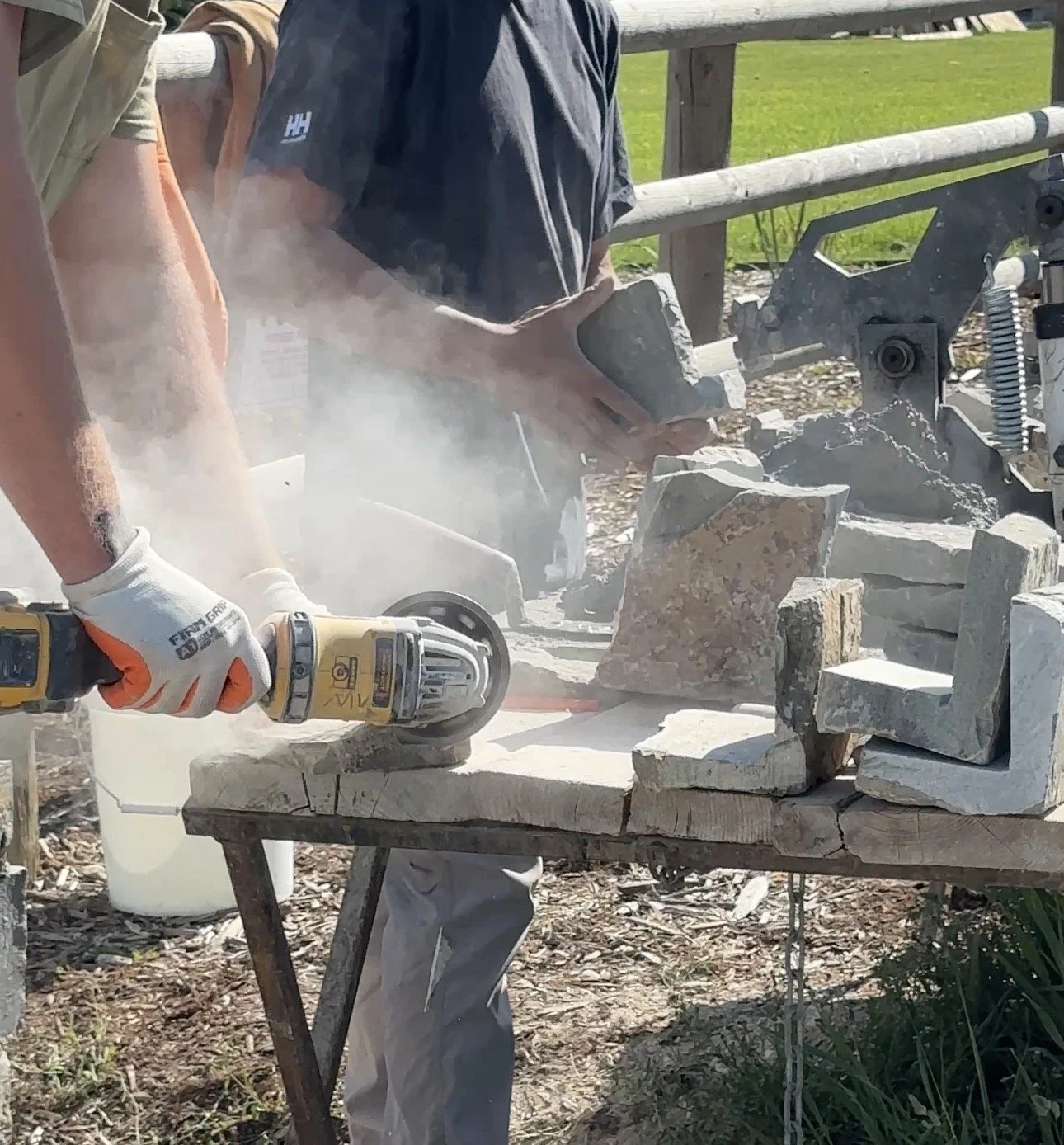
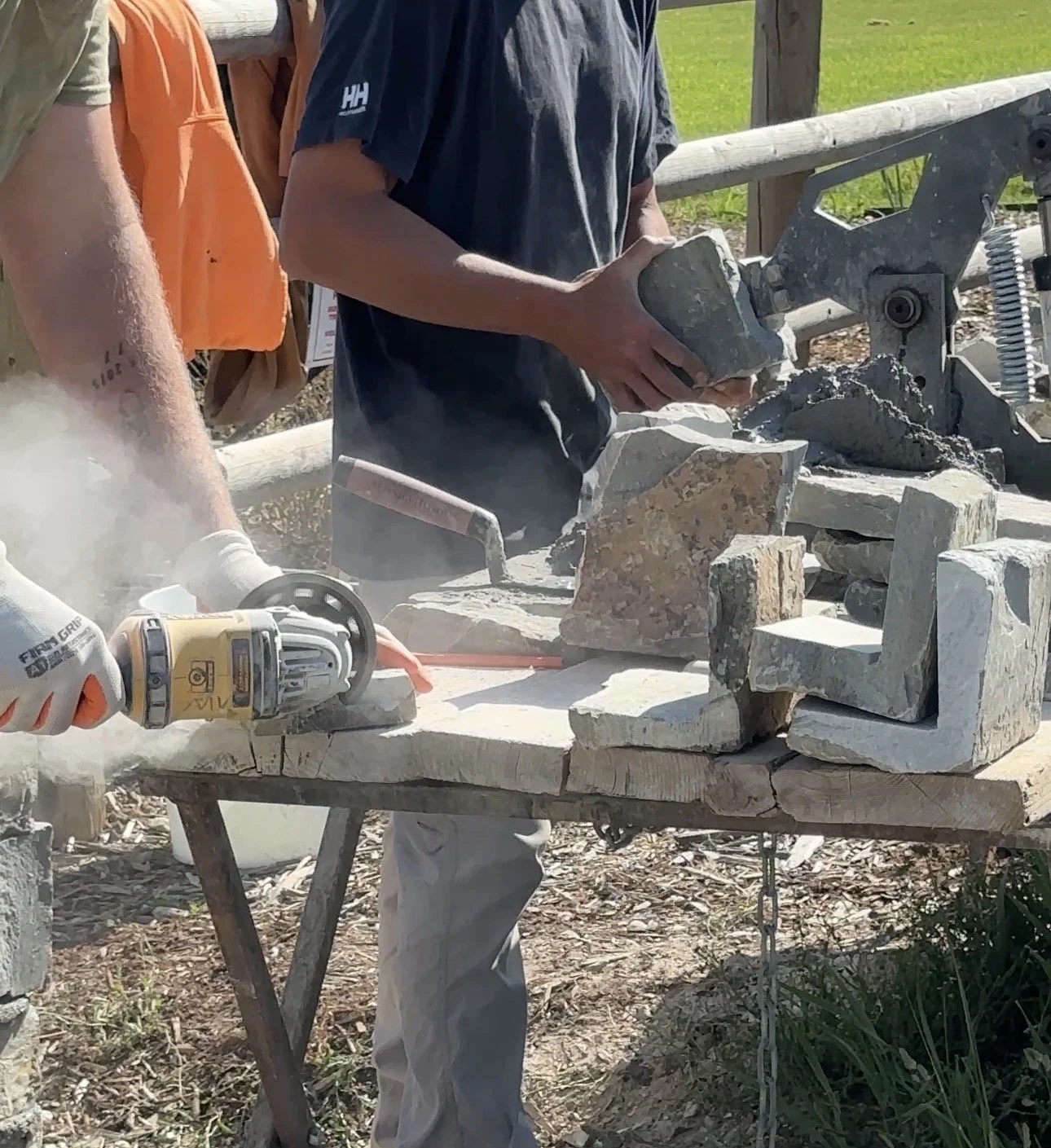
3. Angle Grinder with Diamond Blade
Overview: A handheld cutting tool using a diamond blade. Despite its downsides, the angle grinder remains the most commonly used cutting tool among career masons due to its low upfront cost and portability.
Pros:
Low purchase cost
Highly portable
Familiar to most masons
Works across many stone types
Cons:
Very high dust and silica exposure
Slow for production cutting
Frequent replacement of costly diamond blades (often multiple per week)
Physically demanding and fatiguing
Inconsistent results for repeated cuts
Best for: Everyday jobsite cutting, small adjustments, and crews without access to specialized stone cutting tools.
4. Manual Stone Splitters
Overview: Portable veneer stone cutting tool with a hand controlled mechanism, typically ran without electricity.
Pros:
Dust free cutting
No power needed
Cons:
Costly
Slow, manual labor
Requires handling stone material with one hand
Best for: Lower production masons, locations without power
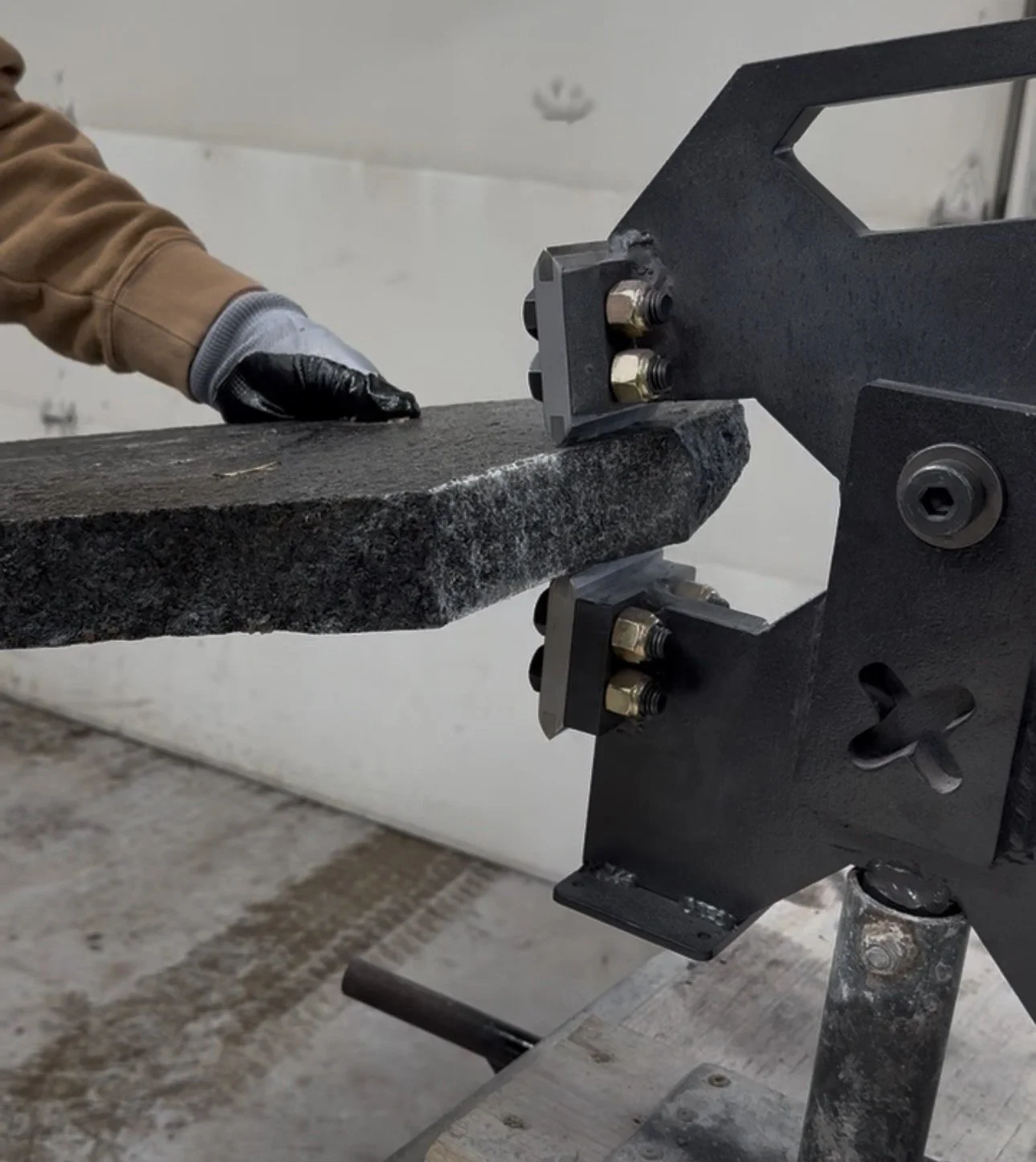
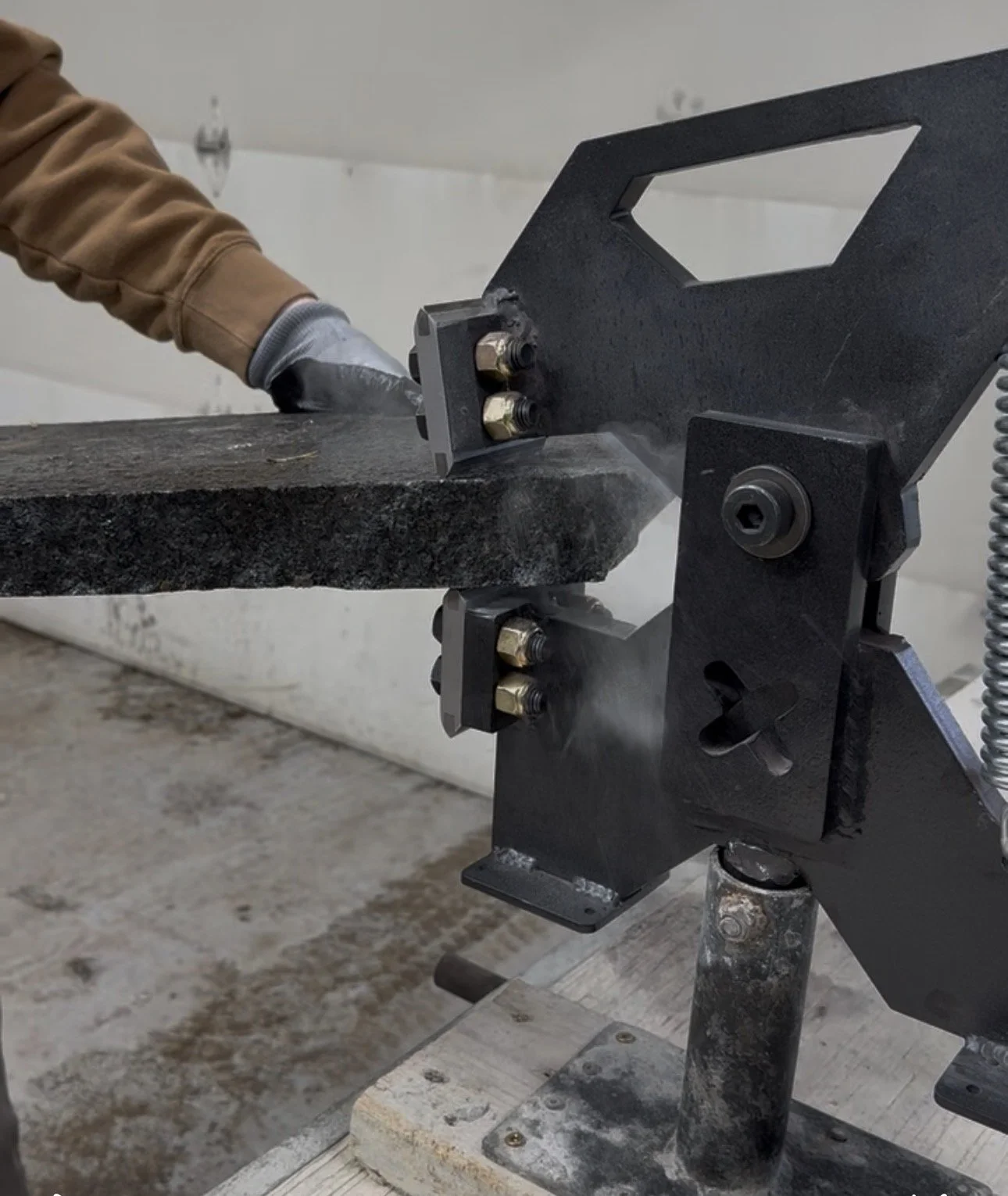
5. Electric Hydraulic Stone Splitters (StoneX Splitter)
Overview: The StoneX Splitter is an electric hydraulic stone splitter used by both professional masonry crews and stone yards/manufacturers. In production environments, it is often placed at the end of a stone assembly line for final shaping and trimming before stones are palletized. It uses hydraulic force powered by electricity to split and trim stone quickly, naturally, and consistently.
Unlike saws, it follows the natural grain of the stone and can trim large pieces lengthwise, making it work for materials like flagstone.
Pros:
Extremely fast compared to saws or grinders
Clean splits with no airborne dust or silica
Ideal for final shaping in stone yards and manufacturing lines
Requires significantly less physical strain than grinders
Excellent for trimming large stone and flagstone lengthwise
Consistent, professional results
Fast return on investment (ROI Calculator)
Cons:
Higher upfront investment (approximately $5,900)
Requires access to electricity (generator is an option)
Designed for splitting and trimming, not precision sawing
Best for: Professional masons, hardscape contractors, stone yards, and stone manufacturers cutting or trimming large volumes of stone efficiently.
| Tool Type | Speed | Dust | Long Term Operating Cost | Best Use |
|---|---|---|---|---|
| Chisel & Hammer | Very Slow | Minimal | Low | Minor adjustments |
| Masonry Saw (Circular) | Medium | Medium | Medium | Straight precision cuts |
| Angle Grinder | Slow–Medium | High | High (blades) | Everyday jobsite cutting |
| Manual Stone Splitter | Medium | None | Medium | Lower production / no power |
| StoneX Splitter (Electric Hydraulic) | Very Fast | None | Low | Production masonry & stone yards |
Chisel & Hammer
Masonry Saw
Angle Grinder
Manual Stone Splitter
StoneX Splitter
What Is the Best Stone Cutting Tool?
When you look beyond upfront price, the answer is clear: the best stone cutting tool is the one that reduces labor time, eliminates silica exposure, and scales with production.
Across one-man shops, multi-person crews, and stone yards, electric hydraulic stone splitters consistently outperform grinders, saws, and manual tools.
⚠️ Silica Dust Exposure & OSHA Compliance
Respirable crystalline silica is one of the most common and costly OSHA violations in masonry.
Angle grinders and saws are primary sources of silica exposure
OSHA enforcement continues to increase
Fines, shutdowns, and liability add real cost
Electric hydraulic stone splitters eliminate the primary source of airborne silica by removing grinding and sawing from most production cutting.
Why Many Professionals Choose the StoneX Splitter
The StoneX Splitter is designed to:
Turn 12–14 hour stone cutting jobs into 6-hour jobs
Split and trim large stone, including flagstone, lengthwise
Eliminate dust and water typically required by saws
Increase crew productivity without adding labor
For contractors, this often means faster project completion, higher margins, and less fatigue.
Frequently Asked Questions (FAQ)
What is the best stone cutting tool for professionals?
For professionals cutting stone regularly, an electric hydraulic stone splitter offers the best balance of speed, consistency, and labor savings. It reduces cutting time, eliminates dust, and minimizes physical strain compared to grinders and saws.
Can a StoneX Splitter replace an angle grinder?
A stone splitter won’t replace an angle grinder for every task, but it can replace it for most production cutting and trimming, especially for flagstone and large pieces. Many crews still keep grinders for minor touch-ups.
Is a StoneX Splitter worth it for a one-man operation?
Yes. One-man shops often feel the impact fastest because time saved goes directly back to the owner. Reducing blade replacement, dust cleanup, and fatigue can make a noticeable difference in daily productivity.
How do stone yards use the StoneX Splitters?
Stone yards and manufacturers often place stone splitters at the end of the assembly line for final shaping before stones are palletized. This improves consistency and reduces manual rework.
Does the StoneX Splitter work on flagstone?
Yes. Electric hydraulic stone splitters are especially effective for trimming flagstone lengthwise and produce natural, clean results.
Is silica dust an OSHA violation?
Respirable crystalline silica exposure is one of the most common OSHA violations in masonry and stone cutting. Tools that reduce grinding and sawing significantly lower silica exposure and help improve OSHA compliance.
Final Thoughts
When choosing a stone cutting tool, the real cost isn’t the purchase price—it’s labor hours, blade replacement, dust management, and physical wear on crews. From solo operators to stone yards, the right tool can transform how fast and efficiently stone gets processed.
For operations cutting stone daily, an electric hydraulic stone splitter can pay for itself far faster than most expect.